Max Oliver
Cinder & EllaMax Oliver, Brian Oliver’s famous film-director father, is both a source of professional opportunity and the person whose respect Brian most wants but has rarely felt he could earn. Their strained relationship gives a family conflict a public stage: Max can praise Brian’s acting, yet he also speaks as an authority on the industry’s power to punish a star whose private behavior becomes a public liability.
Identity and Background
Max is established as a major Hollywood director, a stature visible in Brian’s awareness that he is “one of the big names in Hollywood.” He is also Brian’s father and, at the point of their confrontation, a collaborator on The Ash Chronicles. Brian has accepted the role of Cinder in The Druid Prince partly because of the project, but regards working with his father as an exception he does not intend to repeat: he believes this will be the last time they work together.
The collaboration is already entangled with an artistic disagreement. In her online conversation with Cinder, Ella criticizes Max’s film work as dominated by showy car chases, explosions, and scantily clad women, and argues that he is the wrong director for The Druid Prince. Her attack reflects her investment in the book being adapted and her suspicion that Max has cast Brian as Cinder because he is his son. The exchange places Max’s reputation and family connections inside the very production that Brian hopes will establish him independently.
Father and Son: Resentment and Approval
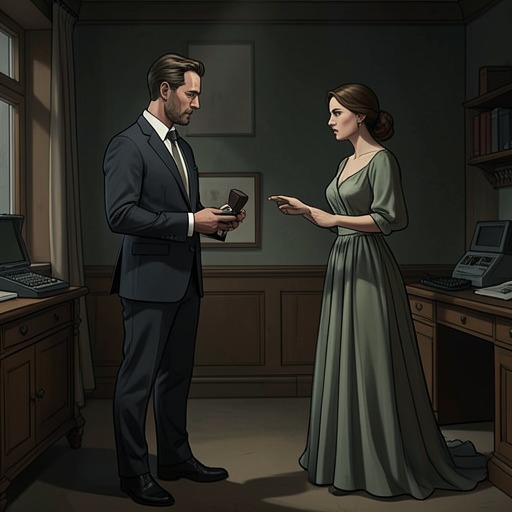
Brian describes a history of feeling dismissed by Max. Since Brian told his father he wanted to pursue acting on his own terms rather than simply appear in Max’s films, Max has mocked the movies Brian made and repeatedly told him he lacked what it takes to reach the top. Brian interprets his father’s criticism as evidence that Max never respected him or believed in him, and that he is waiting for Brian to fail so he can point it out. At a meeting with Brian’s management team, that accumulated anger breaks through: Brian turns against his father with a degree of disgust that surprises even him.
The rupture is not simple indifference. Even while hating Max, Brian keeps looking toward him for recognition. When the team discusses the damaging publicity around Brian, others agree that the situation is serious, but Kaylee does not share their enthusiasm for his performance. Brian’s attention turns to Max, whose judgment carries unusual weight for him. Max looks back gravely and tells Brian that he did well. The praise is so unexpected that Brian returns to his seat and thanks him.
Max then gives the compliment professional substance. He says The Druid Prince could earn Brian respect in the industry, move him beyond teen-star roles, and place him among serious actors. The encouragement matters precisely because it comes from the father Brian has long experienced as a critic. But Max’s approval is coupled to a warning: Hollywood’s elite may refuse to work with someone they regard as disrespectful or troublesome, however good an actor he is. His support therefore arrives in the language of both affection and industry discipline.
Career, Publicity, and Control
Max’s family and professional roles meet in a business culture that treats private relationships as promotional material. When a publicist proposes that Brian get engaged, the management team presents the idea as a marketable love story: it could reassure teenage fans and make Brian appear to have outgrown his earlier reputation. Kaylee is later urged as a partner in a genuine-looking romance, with the promise of millions in additional publicity revenue for the film and a boost to Brian’s career. Brian rejects the premise, pointing out that he cannot convincingly perform real love for Kaylee.
The film’s publicity also surrounds Max’s work directly. Kaylee chooses the Ivy, a well-known Los Angeles celebrity venue, for their first staged date. Paparazzi recognize Brian’s car from half a block away, and the photographers’ flashes begin before the pair reaches the restaurant. The scene shows how quickly a production’s public narrative can follow its actors beyond the set, turning an evening out into an image designed for circulation.
Later, Brian names Max as part of the machinery behind the proposed publicity arrangement. He tells Candice that the story about a charity project was false: Ella was not a fan, he had not worked with a charity, and he was no longer engaged to Kaylee when he kissed Ella. According to Brian, his team and Kaylee invented the story in a meeting he did not attend and released it without his knowledge or consent, despite his assistant’s objection that Brian would never approve it. Brian’s account places Max among the fathers whose influence and position could help the manufactured romance become a route to Hollywood power. The family connection thus becomes part of a system in which relationships are scripted for attention, while Brian and Ella bear the personal and reputational consequences.
Characterization and Significance
Max is presented through a tension between estrangement and recognition rather than through a sustained account of his private life. Brian’s recollection makes him the emblem of a painful standard: the father whose judgment has repeatedly diminished his son, yet whose single sincere-seeming compliment can still draw Brian back to the table. That response reveals how little the conflict has resolved simply because Brian has learned to resent it.
His importance also lies in the way fatherhood and authority overlap. Max’s warning about Hollywood’s willingness to exclude a troublesome actor may be sound professional counsel, but it reaches Brian from the person whose past criticism helped make their working relationship unbearable. In the story’s treatment of celebrity, the same industry that turns romance into publicity also turns family connections into career leverage. Max stands at that intersection—as Brian’s father, a renowned director, and a figure whose approval and influence remain difficult to separate.